
If you’re noticing ice buildup in gutters, large icicles hanging from your eaves, or frozen downspouts during winter, you’re right to be concerned. These are more than cosmetic issues; they’re warning signs.
Edmonton homeowners often call Darren Does That for gutter cleaning after spotting ice and snow piling up along the roofline. What many don’t realize is that the visible ice is usually a symptom of a deeper problem inside the gutter system.
This hits a very real Edmonton winter problem. Homeowners notice ice, icicles, and frozen gutters and worry about:
- Roof damage
- Fascia damage
- Leaks and water intrusion
Those concerns are valid. When you see ice building up, know that it can lead to significant gutter damage and water damage if ignored. Here’s why it happens and what you can do to prevent it.
How Ice Buildup in Gutters Starts
Ice doesn’t appear out of nowhere. It forms because of a chain reaction involving snow, heat, debris, and freezing temperatures.
Here’s the typical pattern that we see during Edmonton winters:
- Heavy snowfall accumulates on the roof.
- Warm air escapes from the attic due to heat loss/poor insulation.
- The warmth causes melting snow higher up on the roof.
- That water flows down toward the colder eaves.
- Temperatures drop, then water refreezes at the edge of the roof and inside the gutters.
Over time, this creates ice dams.
What Are Ice Dams?
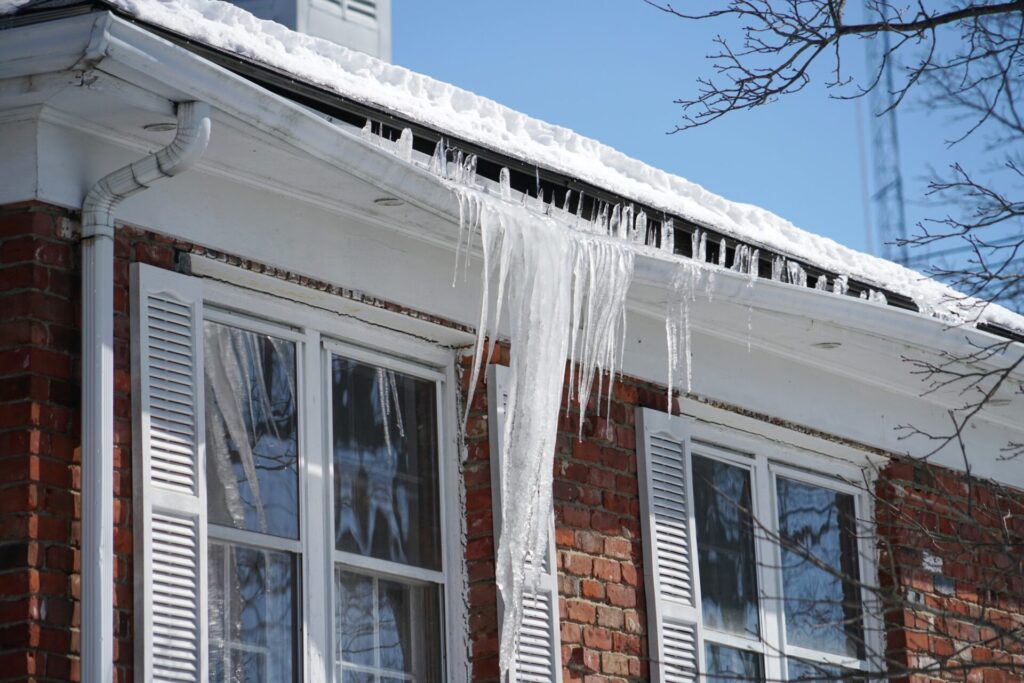
Ice dams form when melted snow refreezes at the edge of a roof, preventing proper drainage. Instead of flowing freely through the gutter system and downspouts, water backs up behind the dam.
That backup creates pressure. That pressure creates ice dams.
When ice dams form, they can:
- Push under shingles
- Trap standing water on the roof
- Force water into your attic or walls
- Cause leaks inside your home
When gutters are clogged, it gets worse. Blocked gutters prevent proper drainage, accelerating ice dam formation and increasing the weight of ice and snow sitting on the system.
Why Ice Gets Worse When Your Gutter is Clogged
Your gutters are designed to channel water away from your house. When they’re clear, water flow is controlled and directed safely away from your foundation.
But when debris builds up (leaves, twigs, seeds from trees, other debris), water can’t drain properly.
In Edmonton especially, many leaves (especially from elm trees) don’t fall until after freezing weather has arrived, so early spring gutter cleaning may be a better time to catch them. Leaves that sit inside gutters all winter trap moisture and create perfect conditions for a buildup of ice.
When gutters are clogged:
- Water sits instead of draining
- Standing water freezes quickly
- Ice expands and cause cracks in the gutter
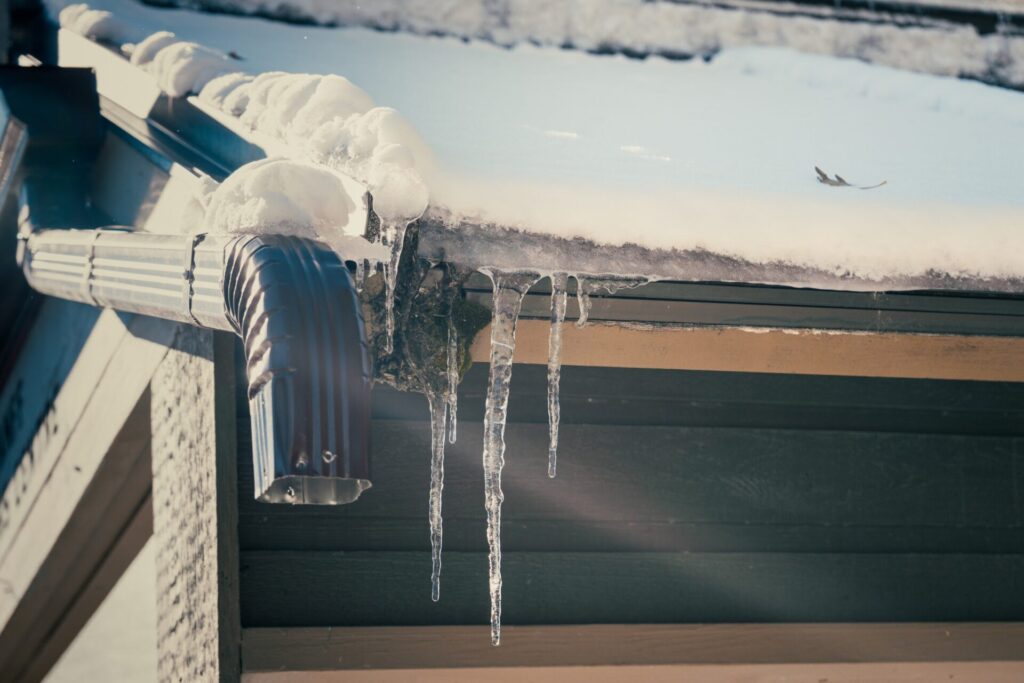
- Downspouts freeze solid
- Ice dams form more easily
Ice expands when it freezes, which can split seams, cause sagging, and even detach gutters from the house. The weight alone can be enough to cause serious structural strain.
The Real Damage Ice Can Cause
A buildup of ice in your gutters can affect multiple parts of your home.
1. Gutter Damage
The weight of ice and snow can:
- Pull gutters away from fascia
- Cause joints to break
- Crack or warp the system
- Bend brackets and supports
Once that happens, your gutters may no longer drain properly even after the ice melts.
2. Roof and Shingle Damage
When ice dams are formed, water trapped behind them can push up under shingles. That moisture may:
- Soak roof decking
- Cause shingles to lift or break
- Lead to rot
The longer it sits, the higher the repair costs.
3. Fascia and Eaves Damage
Ice dams can compromise the structural integrity of eaves and fascia. Water seeps behind the boards, freezes, expands, and weakens wood components.
4. Interior Water Intrusion
Water trapped behind ice dams can lead to:
- Ceiling stains
- Peeling paint
- Mold growth
- Damaged insulation
Ice dams will often have signs of showing up indoors first — a damp patch on the ceiling or unexplained moisture near exterior walls.
Why Edmonton Homes Are Especially Vulnerable
Edmonton winters create the perfect conditions for an accumulation of ice:
- Heavy snowfall
- Frequent freeze-thaw cycles
- Temperatures that fluctuate above and below freezing
- Cold air combined with interior heat
If your attic isn’t properly insulated to maintain a consistent temperature, warm air rises and causes uneven melting across the roof surface. That uneven melting is one of the biggest contributors to ice dam formation.
Even if you have proper insulation and your ventilation is in good shape, a clogged gutter alone can create a blockage, turning melting snow into a problem.
Can You Just Melt the Ice?
It’s tempting to try quick fixes like using rock salt, applying ice melt or hitting the ice with tools, but these approaches come with risk.
Using hammers or ice choppers can dent gutters and damage the roof. Rock salt can corrode metal components. Trying to break large icicles can cause sections of the gutter to snap off entirely.
Professional snow removal specialists can safely handle severe ice dams. To truly prevent ice dams is to prevent the conditions that allow ice buildup in the first place.
How to Prevent Ice Buildup in Gutters
Prevent this buildup of ice in your gutters is through proactive measures before and after winter.
1. Clean Gutters Before and After Winter
Clean gutters allow water to flow freely during melting periods.
Late fall cleaning is important, but in Edmonton, early spring cleaning is often just as critical. Because elm leaves fall late, many gutters become clogged after freezing temperatures arrive.
If you’re unsure what the process involves, take a look at Gutter Cleaning: What to Expect with Darren to understand how professional cleaning protects your system.
2. Keep Downspouts Clear
Downspouts must drain properly. If they freeze or clog, water backs up into the entire system.
Properly directing downspouts away from the foundation also helps prevent soil erosion and water pooling during winter melt periods.
3. Consider Gutter Guards
Gutter guards are screens that sit on top of your gutter to prevent leaves and other debris from falling in. Gutter guards reduce the risk of clogs, which prevents ice dams from forming.
While choosing to install gutter guards can help, they are not a substitute for inspection and maintenance.
4. Ensure Eavestroughs Are Sloped Towards Drains
Competently installed gutters slope towards downspouts so the system self-empties. Over years the settling of a building or ice damage can change the grading of troughs and cause the system to have low spots where water gathers.
If water does not clear the gutter, it freezes up and causes more blockages, resulting in ice dams in systems that are otherwise clear.
5. Address Insulation and Ventilation
Heat loss from the attic contributes to how uneven the snow melts. Ensuring your attic is properly insulated and ventilated helps maintain a consistent temperature across the roof.
This reduces the freeze-thaw cycle that accelerates ice dam formation.
Why Waiting Can Cost More
Many homeowners wait until they see visible damage before acting. But by that point, repairs may already be necessary.
Ice dams can cause gutters to sag, crack, or detach from the house due to the excessive weight of ice buildup. Water trapped behind ice can lead to leaks, mold growth, and structural rot in wooden components.
Regular inspections during winter and scheduled cleaning afterward are far less expensive than repairing fascia, replacing sections of gutter, or addressing interior water damage. Plus, you can prevent ice dams from forming right in their tracks.
If you’ve ever wondered What Happens if you Never Clean Your Gutters, winter ice damage is one of the most common answers.
The Role of Preventative Gutter Cleaning in Edmonton
Gutter cleaning isn’t just a fall chore. In Edmonton’s climate, it’s part of responsible home ownership:
- Snow on the roof melts unpredictably
- Temperatures drop suddenly
- Debris often sits inside gutters all winter
Late-winter and early-spring gutter cleaning becomes preventative, not optional.
Clearing out debris allows melting snow to drain properly during thaw cycles. That dramatically reduces the risk of ice dams and standing water.
For many homes, it’s a simple way to protect the roof, gutters, fascia, attic, and foundation in one step.
When to Call a Professional
It’s time to bring in the professionals if you start to see:
- Large icicles forming repeatedly
- Ice packed solid inside gutters
- Water staining indoors
- Gutters pulling away from the house
- Downspouts not draining
It’s time to get expert advice.
Protect Your Home Before the Next Freeze-Thaw Cycle
A buildup of ice in your gutter is more than a seasonal nuisance. It’s a sign your drainage system isn’t working the way it should.
By keeping gutters clear, ensuring proper drainage, and addressing issues early, you can prevent ice dams, reduce water damage risk, and protect your house from costly repairs.
Darren Does That serves Edmonton and surrounding areas with an experienced in-house team, professional equipment, and a focus on preventative maintenance. If you’re concerned about ice dams, clogged gutters, or winter damage, schedule a professional assessmentwith us today.