
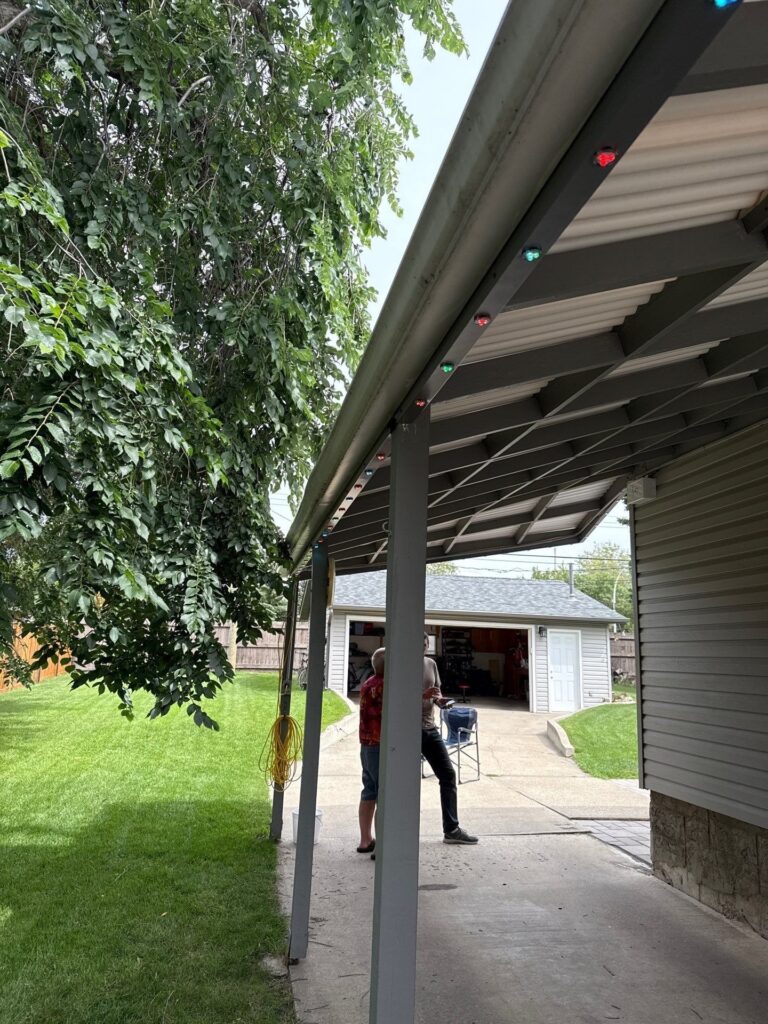
Permanent holiday lights are convenient and look clean year round, but they are not perfect. Before committing to a permanent lighting system, understand the real tradeoffs: upfront cost, ongoing maintenance, design constraints, potential light pollution, and the need for professional installation that is actually done right in Canadian winters. Use this guide to weigh permanent lights against traditional Christmas lights and temporary lights so you can decide whether a permanent system fits your home, budget, and tolerance for risk.
TL;DR — What Are the Downsides of Permanent Christmas Lights?
- Upfront cost is high and you may be tied to a brand ecosystem
- Repairs still happen and require specific parts or service visits
- Year round exposure to UV, snow, and ice stresses hardware
- Light pollution and higher electric bill if you run bright scenes nightly
- Poor design or sloppy installation harms curb appeal and can create hazards
- Apps and Wi-Fi add failure points
- Permanent tracks complicate future exterior work
Darren Does That mitigates these risks with high quality materials, professionally installed wiring, UV resistant hardware, schedules that control energy use, and responsive local service supported by 500+ five-star reviews.
Introduction to Permanent Outdoor Lights
Permanent Christmas lights are low-profile tracks with highly energy efficient LED bulbs mounted along the roofline and other architectural features. They create a cozy glow year round and swap from warm white lights to Halloween orange or team colours for various occasions. They promise everyday elegance without climbing ladders. Still, permanent lights introduce different responsibilities than traditional string lights. Read each downside carefully and decide whether the benefits outweigh the costs for your outdoor space.
Downside 1: Upfront Cost and Vendor Lock-In
Permanent Christmas lights cost more on day one than traditional lights. The initial investment covers hardware, tracks, controllers, and one professional installation. If you choose a proprietary permanent LED system, you are tied to that brand’s components and app for years. Although, a particularly clever installer such as yours truly, may be able to offer some compatibility beyond a specific brand. For homeowners who move often or prefer DIY installation, the upfront cost may outweigh long term savings.
What this means in practice:
- Higher initial cost versus buying seasonal string lights
- Brand ecosystems restrict parts mixing and future upgrades
- Permanent Christmas lights have less value if you won’t use them year round or stay put long enough to recover the premium
Downside 2: Repairs Still Happen
Permanent LED lights last longer than old bulbs, but they are not immortal, and their longevity is hugely affected by the quality of work of the installer. Faulty lighting pucks, failing power supplies, or damaged wires can happen. When a section fails, you cannot just run to a big box store for a quick replacement like traditional lights. You will either schedule a service visit or source exact parts from the installer. And some brands of permanent LED lights are much harder to repair than others.
Expectations to set:
- Even highly energy efficient LEDs can have manufacturing defects
- Troubleshooting app, controller, and wiring takes can take more time than traditional lights as the system is more complex
- Service appointments beat shaky ladders, but they are still time consuming
Downside 3: Exposure to Weather and UV
Permanent outdoor Christmas lights live outside all year. UV rays, summer heat, ice, and wind work on tracks and seals daily. High quality materials and UV resistant materials help, but exposure is exposure. In very cold weather, plastic becomes brittle and connections are stressed. Canadian winters are unforgiving.
Mitigation requires:
- High quality materials rated for cold weather
- Sealed connections, safe mounting, and additional steps to protect from corrosion
- A professional installer who understands local freeze-thaw cycles and UV exposure
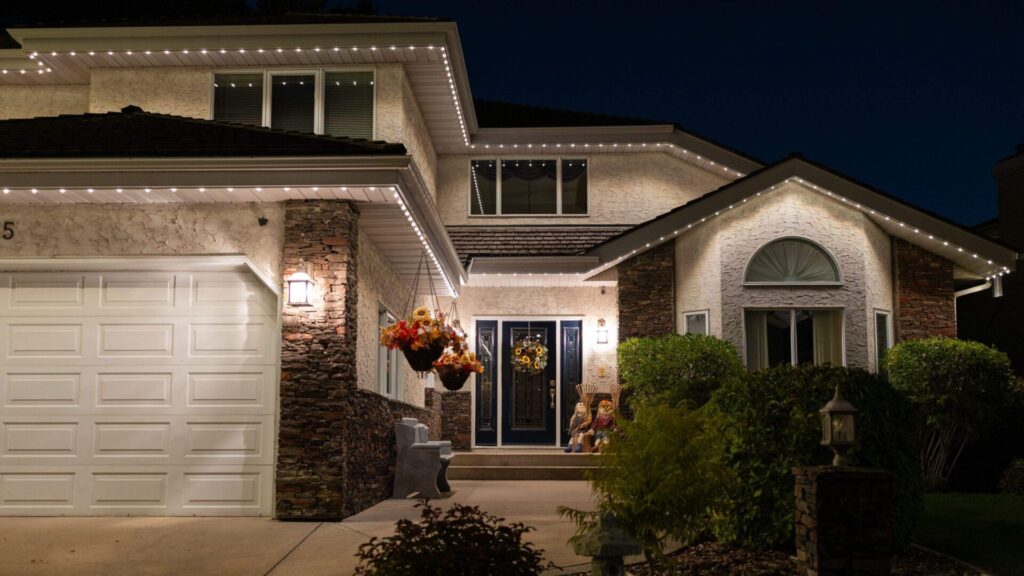
Downside 4: Light Pollution and Over-Lighting
Permanent lighting systems make it easy to keep the home bright every night. That convenience can turn into light pollution and higher electricity bills if you run bright scenes late. In tightly spaced neighbourhoods, aggressive shows can irritate neighbours.
Design with restraint:
- Prefer soft warm white lights for daily use
- Dim brightness and use schedules
- Keep twinkling lights and vibrant scenes to the holiday season and special events
- Downward oriented lights are less likely to interfere with neighbours than outward oriented lights
Downside 5: Aesthetic Misses and Curb Appeal Risks
Permanent lights are visible hardware. Poorly planned tracks, inconsistent spacing, and lazy transitions reduce curb appeal. If the installation process ignores your home’s architecture, you trade everyday elegance for permanent clutter.
Avoid these mistakes:
- Visible wires or controllers on the exterior
- Tracks mounted where snow sheds or gutters overflow
- Inconsistent spacing that looks like traditional lights left up year round
Downside 6: App and Connectivity Dependence
Permanent LED systems are smart. When the app glitches, Wi-Fi drops, or accounts change, the lights may not work as intended. Voice integrations like Google Home are convenient, but they add another potential failure point.
Plan for reliability:
- Controller placement where signal is strong
- Hard schedules that run even without the app
- Documented access for all household members
Downside 7: Not All Installers Are Equal
The biggest risk is hiring professionals who are not actually professional installers. Permanent lighting systems need clean wiring, drip loops, sealed penetrations, and secure power supplies. Sloppy work creates fire hazards, water ingress, premature dimming, and expensive fixes.
What to require:
- In-house crews, not random subcontractors
- Before-and-after photos and a written warranty
- Clear specs for loads, breakers, and outdoor-rated components
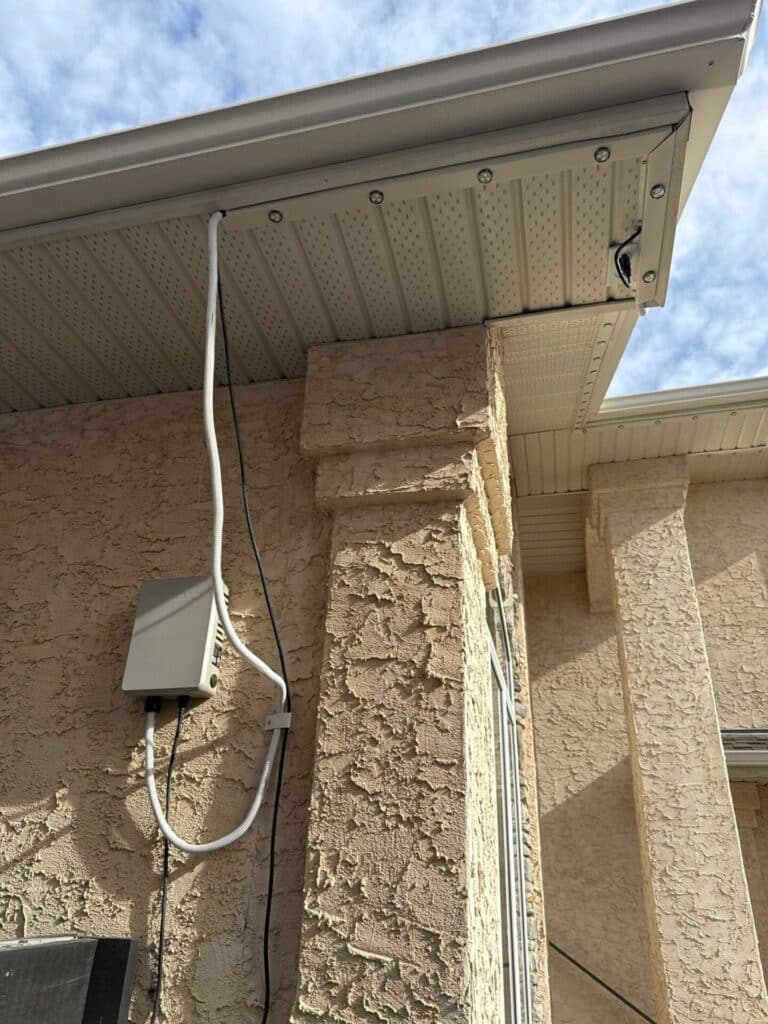
Downside 8: Permanent Means Permanent
Once tracks are up, changes are not trivial. If you repaint, replace soffit or fascia, or redo gutters, you will coordinate around the system. Traditional lights and seasonal lights are flexible. Permanent systems lock in line length and location.
Plan ahead:
- Confirm exterior renovations are completed ahead of lighting installation.
- Map zones for future landscape lighting so systems do not clash
- Keep access to power supplies for service
When Traditional Christmas Lights Make More Sense
Choose traditional string lights if any of the following are true:
- You move often or rent
- You enjoy DIY projects and do not mind climbing ladders
- You only want holiday lighting a few weeks per year
- You want the absolute lowest initial cost with no attachment to a brand ecosystem
- You prefer the look of string lights to the downfiring hard-mounted permanent lights.
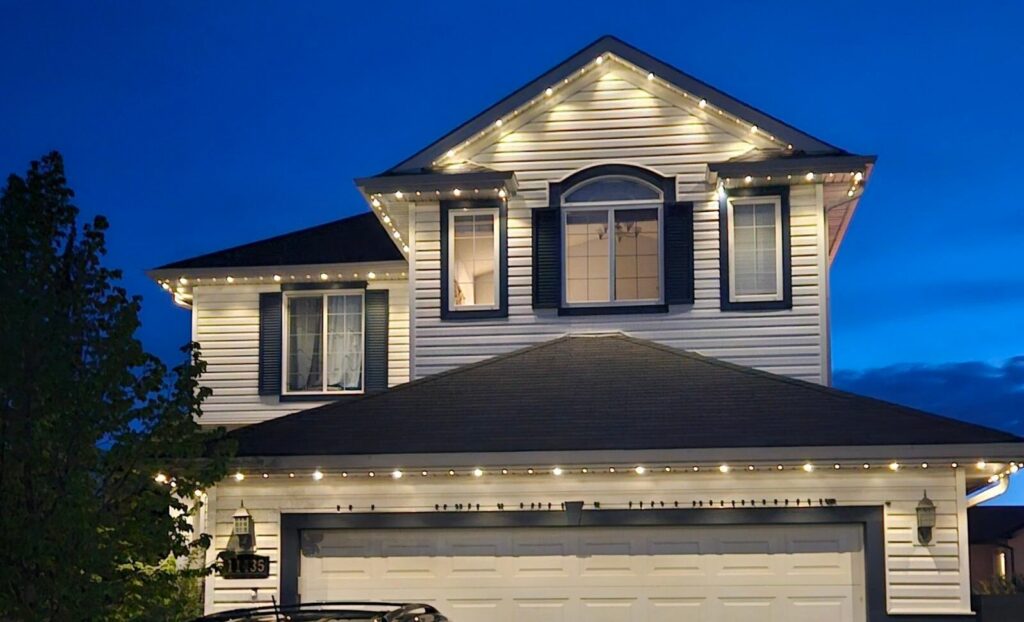
How Darren Does That Mitigates These Downsides
Darren Does That focuses on practical risk reduction for permanent outdoor lights in Edmonton:
- Professional installation by a full-time, in-house crew with cold-weather experience
- Watts permanent LED systems, sealed connections, clean wiring, and mounting that protects shingles and gutters
- UV resistant materials and hardware spec’d for Canadian winters and extreme weather
- App setup with schedules to control electricity bills and reduce light pollution
- Before-and-after photos, clear warranty terms, and real local service if a section fails
What Edmonton homeowners report:
- “Darren was a step ahead. Demoed the system, answered every question, and the crew made sure I understood the app before they left.”
- “Install was fast despite bad weather. They even power washed the driveway before leaving. Professional, efficient, excellent customer service.”
- “The permanent lights changed the look of our home at night. Clean install, no tangled cords, and the app is simple.”
These experiences do not erase the downsides, but they show how a disciplined process and high quality materials reduce them.
Audit and Verification: What To Check Before You Buy
- Confirm permanent LED lights, outdoor-rated power supplies, sealed connectors
- Confirm UV resistant materials, secure strain relief, and protected cable runs
- Confirm mounting points avoid water paths and do not stress the roof system
- Confirm app schedules, dimming, and sunrise or sunset automation
- Confirm service commitments, parts availability, and warranty in writing
- Confirm the work is professionally installed by an in-house team, not subcontracted without oversight
Final Tips for Minimizing Drawbacks
- Use warm white daily at lower brightness to save money and limit light pollution
- Set firm schedules so lights turn off automatically
- Choose scenes that suit your home’s architecture and keep highly dynamic shows short during the holiday season
- Photograph your installation map and controller locations for future service
- Re-inspect visible runs each spring for signs of dimming, looseness, and yellowing.
Final Thoughts
Permanent lighting systems trade seasonal hassles for permanence and control. The downsides are real: initial cost, exposure, service needs, design risk, and dependence on installers and apps. If you choose permanent lights, insist on a rigorous installation process, verified materials, and local service that will be there when the old bulbs in a section fail or an app update breaks a scene. Done right, you keep the cozy ambiance year round without wasted weekends or tangled cords.