Your eavestrough system is your home’s unsung hero, quietly channeling water away from your foundation and landscaping. But when things go wrong, the damage can be extensive. Whether you call them eavestroughs or rain gutters, keeping them in top shape is crucial for home maintenance.
In this guide, we will break down the essential vocabulary you need to understand your system and explore the most common issues that prevent gutters from doing their job—along with the best ways to fix them.
📖 Essential Eavestrough Vocabulary
Before diving into the problems, let’s define the key components of your gutter system:
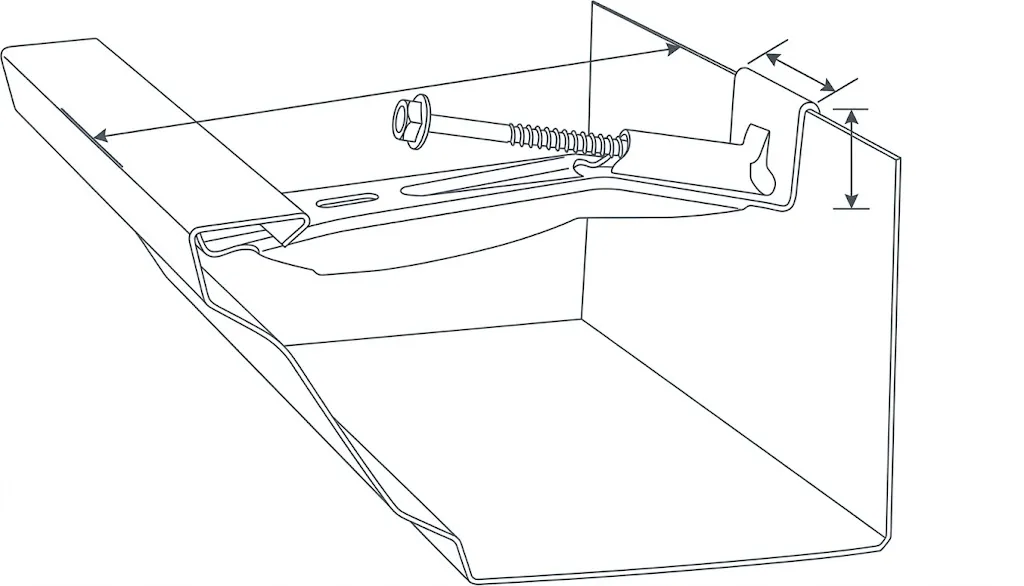
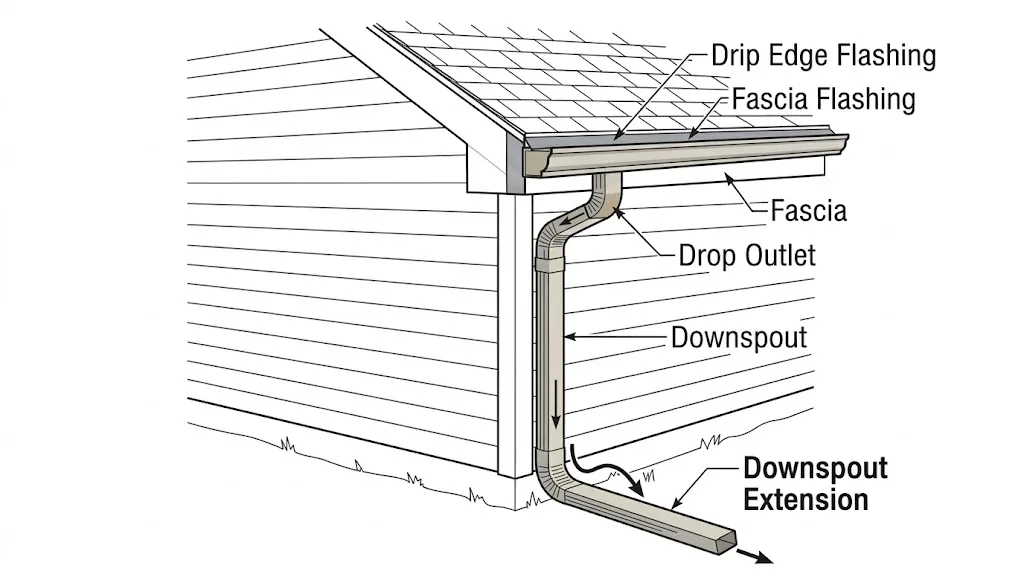
- Bracket or Hanger: A metal clip that attaches to the front and back of an eavestrough and holds it to the fascia with a screw.
- Downspout: The vertical pipe that carries water from the eavestroughs down to the ground level.
- Downspout Extension: The lowest piece on a downspout: the horizontal piece that gets water away from the house.
- Drop Outlet: The connection piece that securely attaches the downspout to the eavestrough.
- Drip Edge Flashing: A piece of metal flashing that is installed under the last shingle at the eaves and hangs over the eavestrough protecting the system from water running down the fascia and behind the eavestrough. This flashing is not required by building code in Alberta, but I really wish it was.
- Fascia: The wooden board attached to the exposed edges of your roof rafters, which the gutters secure into.
- Fascia Flashing: The aluminum cover that protects the fascia from exposure to the elements. Often referred to simply as fascia.
- Grading: The slope of a surface. In an eavestrough positive grading means water at any point in the trough can flow downhill towards a drain/downspout.
- Gutter Guard: A device for an eavestrough that protects the trough from debris. They may come in many forms: perforated metal, metal or plastic mesh, foam, brushes, etc.
- Outlet Cage: An attachment that installs inside the trough at the outlet that holds back bulky debris but allows water through. These can be useful but make regular cleaning even more important as debris has no chance to wash out of the system.
- Splash Guard: An attachment to an eavestrough lip that builds up height so high volume water coming down the roof can’t “jump” the gutter.
- Spike and Ferrule : An alternative way of holding eavestroughs to fascia. These are a long thick nail (spike) accompanied by an aluminum spacer sleeve (ferrule)
- Valley: An internal angle on your roof where two sloping sections meet, often directing a large volume of water to one spot.
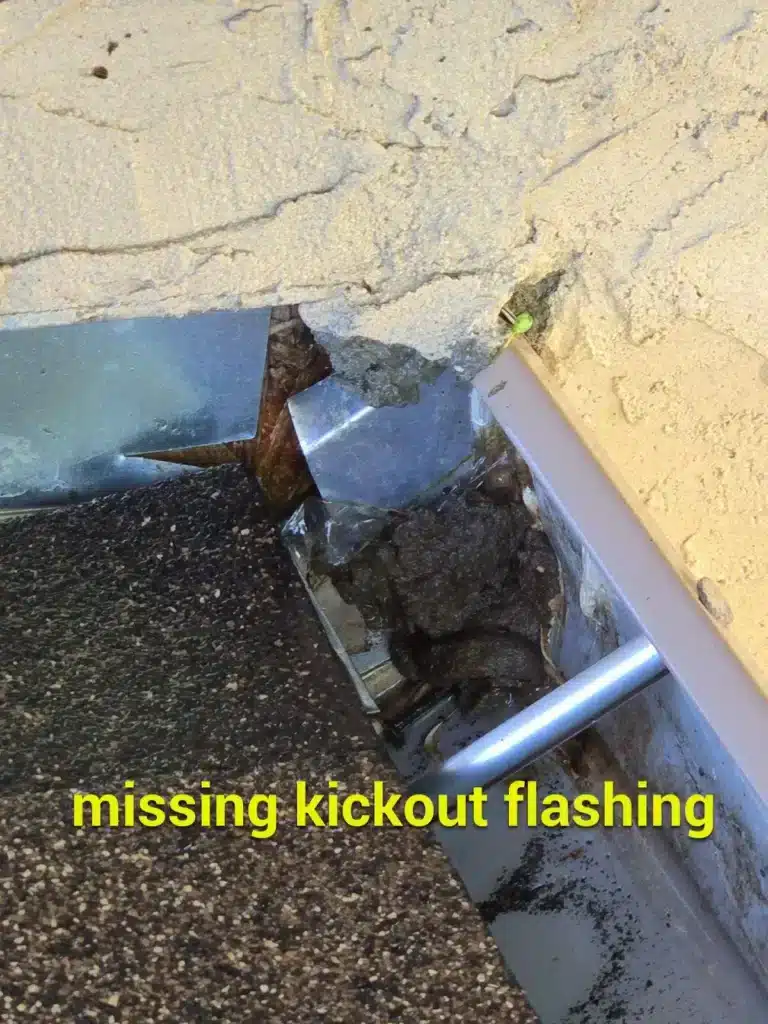
- Kickout Flashing: A specialized piece of flashing designed to guide water into a trough where the end of a trough meets a wall.
⚠️ Common Eavestrough Issues & How to Fix Them
Here are the most frequent problems that can compromise your eavestrough system, complete with what to look out for and how to resolve them.
Flow and Drainage Problems
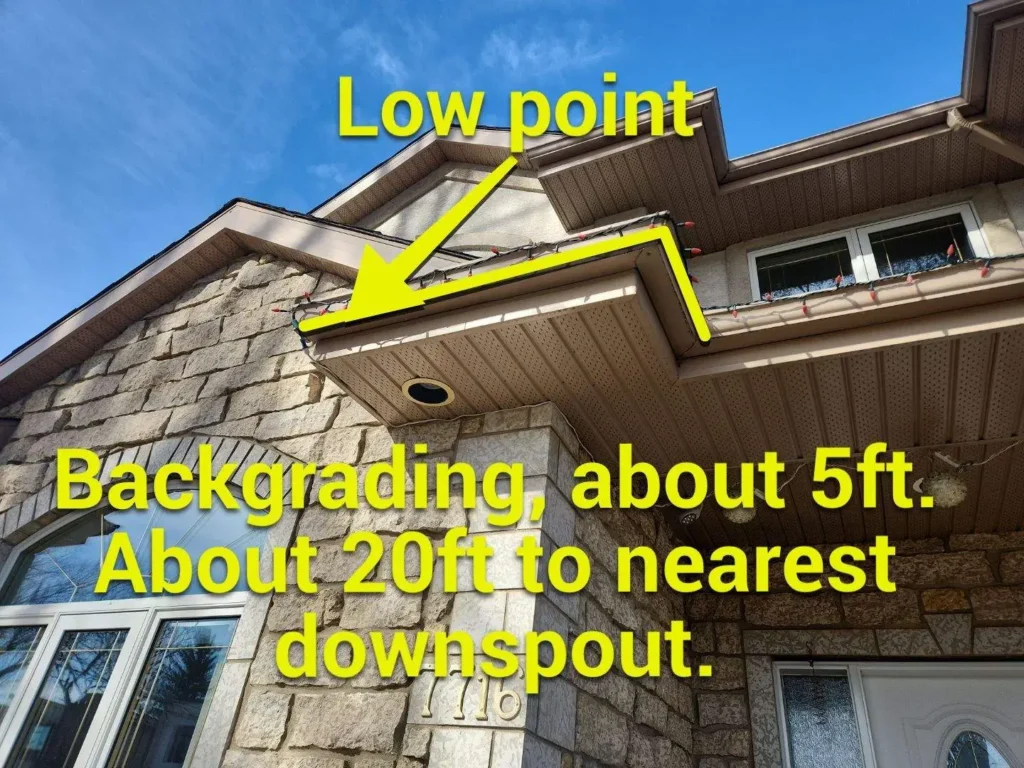
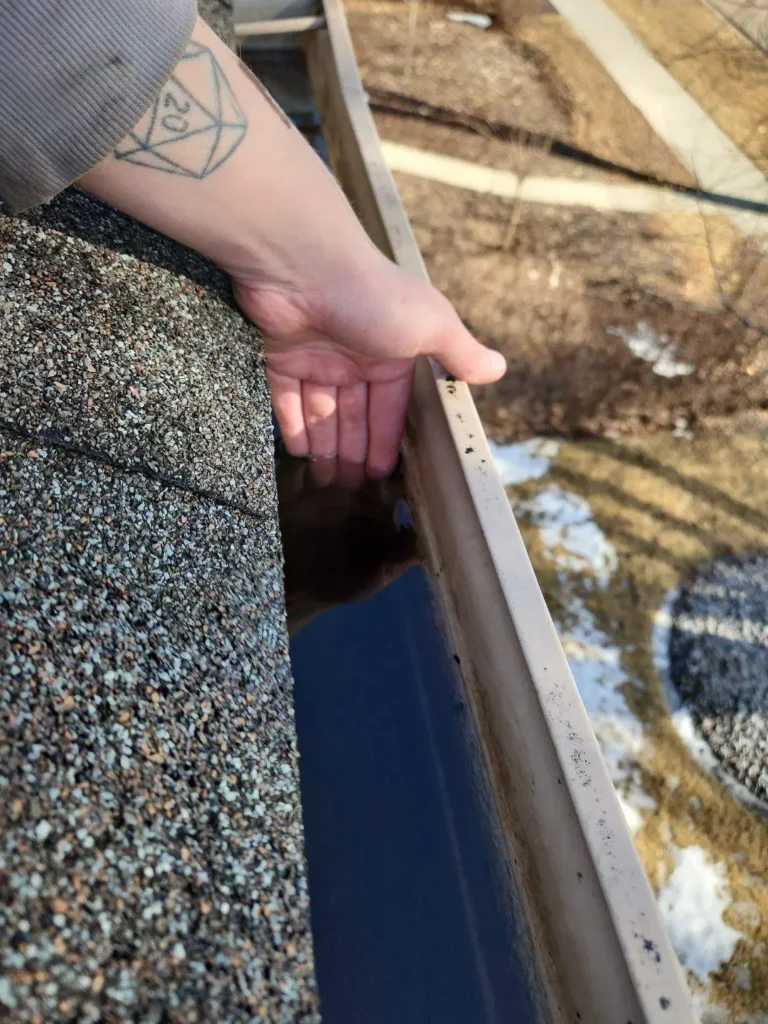
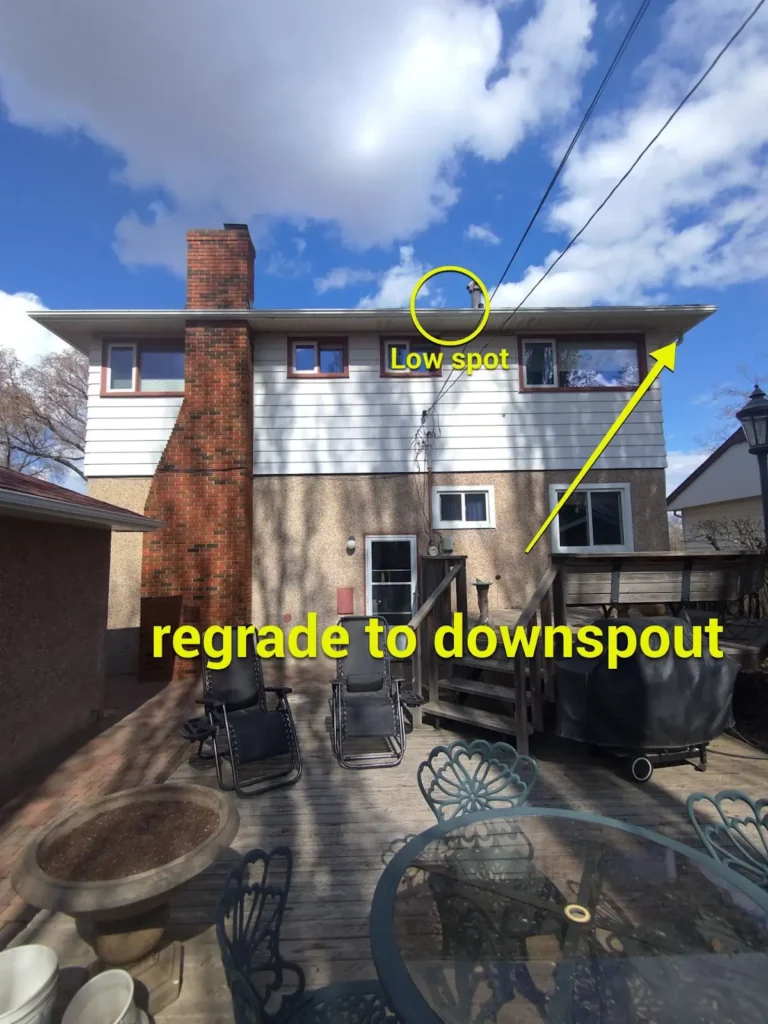
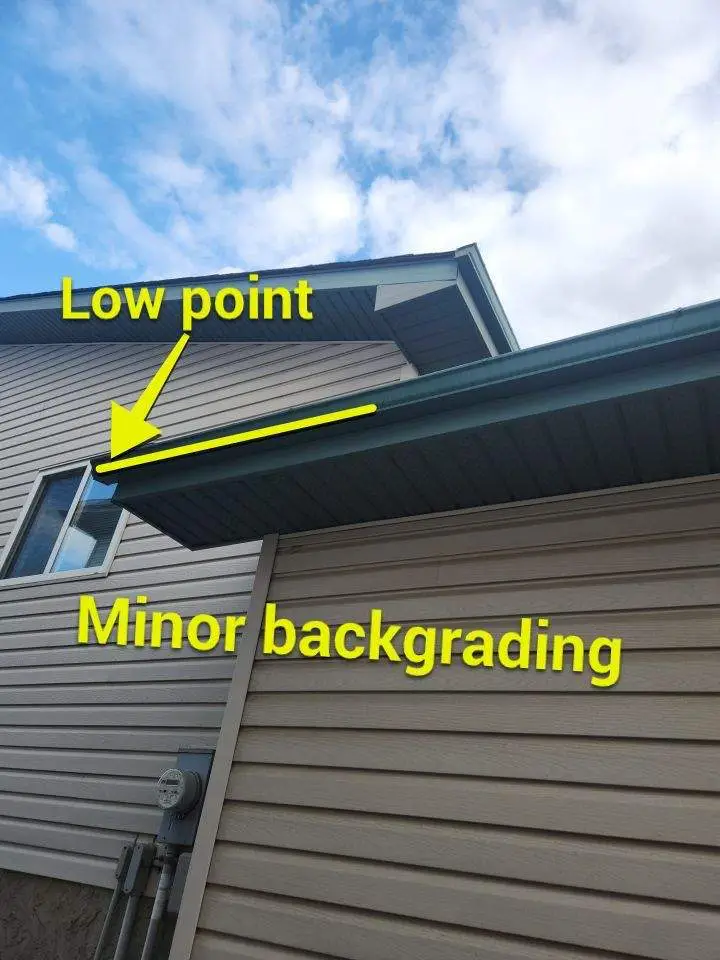
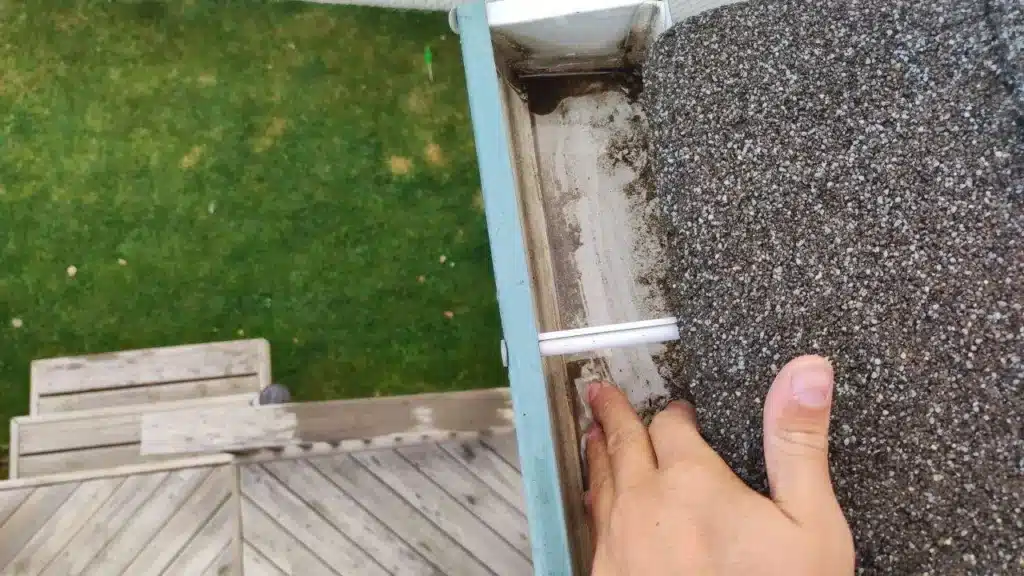
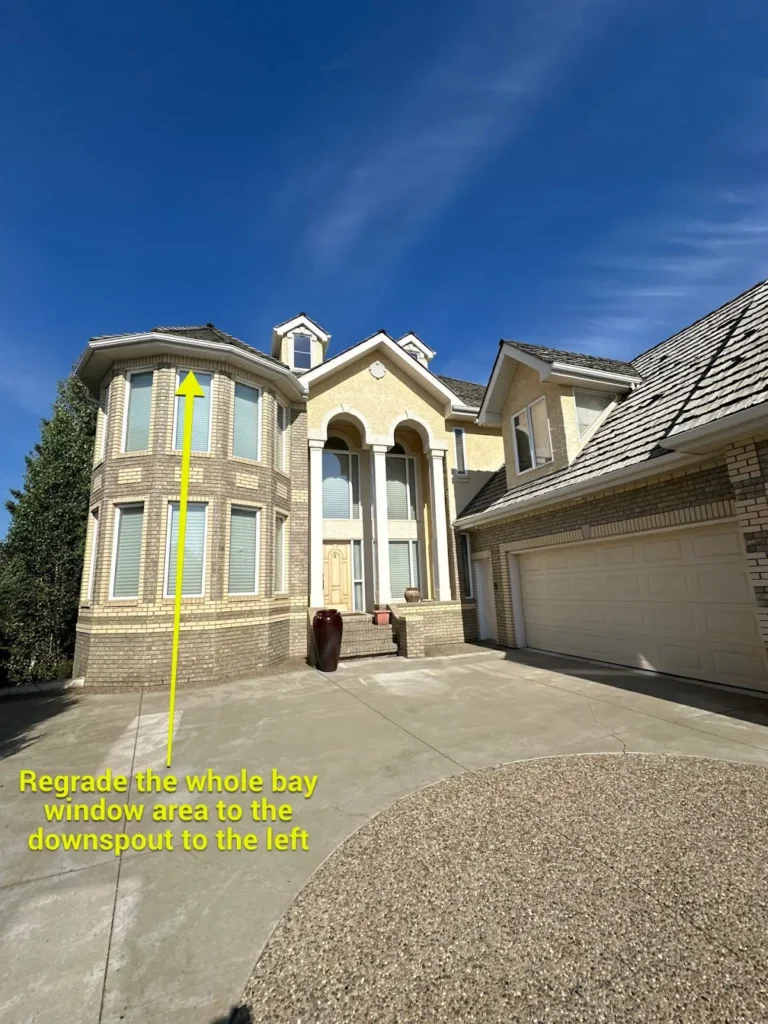
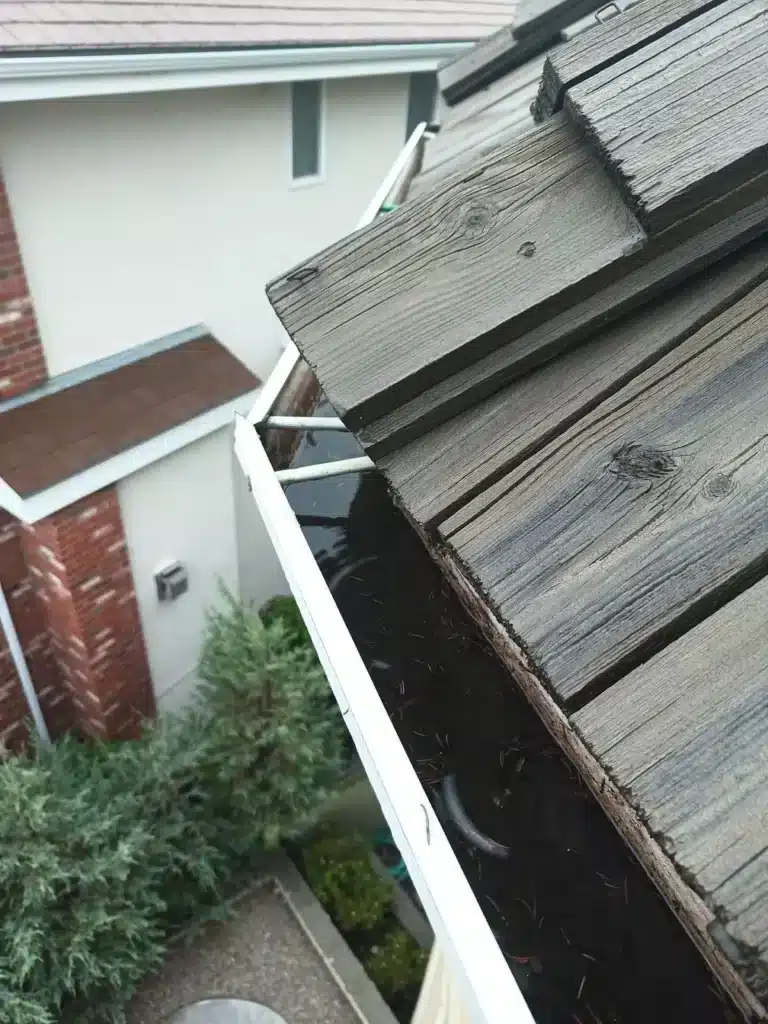
- 📉 Backgrading: Water in the eavestrough should flow downhill towards downspouts. When a trough has a low spot that is not at a downspout it is considered backgraded and water pools there, unable to drain. This can result in accelerated rusting, premature clogging, ice damming and overflow.
- The Fix: Adjust the slope of the gutter. This usually involves removing the hangers between the undesired low spot and the drain/downspout, adjusting the pitch so gravity works in your favor (usually a ¼ inch drop for every 10 feet), and securely reattaching it.
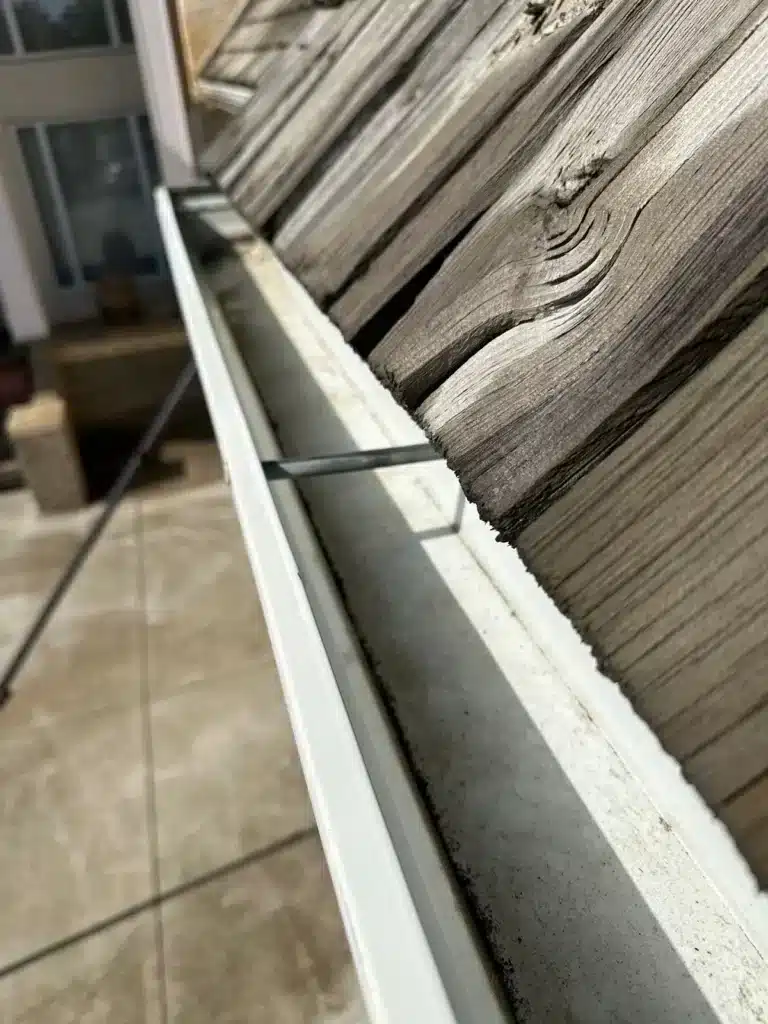
- 🌊 Overflow at Valley: A valley on the roof is discharging more of the roof area to one small part of the trough than the trough can handle.
- The Fix: This issue may be repairable with a splash guard. Installing an aluminum guard at the corner catches the fast-moving water and redirects it down into the trough.
- 🛑 Clogged Downspouts: A blockage in the downspout prevents the system from draining, leading to water backing up.
- The Fix: Clear the blockage using a plumber’s snake or snaking with a garden hose. For tough clogs the downspout may need disassembly. To prevent future issues, ensure your eavestroughs are cleaned regularly or install quality leaf guards.
- The Fix: Clear the blockage using a plumber’s snake or snaking with a garden hose. For tough clogs the downspout may need disassembly. To prevent future issues, ensure your eavestroughs are cleaned regularly or install quality leaf guards.
- 🚰 Insufficient Drainage: There are either not enough downspouts or the downspouts are not large enough to sufficiently drain the eavestroughs.
- The Fix: Upgrade to larger downspouts (e.g., replacing standard 2 and ⅝ inch pipes with 3 inch square ones) or add additional downspouts along the gutter line to handle the water volume.
Leaks and Material Wear
- 💧 Leaking Seams: Aged or poorly sealed seams in the trough are leaking water. This can cause damage to landscaping, introduce extra moisture to foundations, or create slippery ice if falling on any paths in the winter.
- The Fix: Strip away the failed sealant, then apply a high-quality, waterproof gutter sealant (like polyurethane) to stop the leak. Note that leaking seams are often concurrent with backgrading, and backgrading must also be corrected for a resealed seam to last.
- 🧩 Non-Seamless Gutters: Likely the troughs were a DIY job built with 10′ sections of trough from a hardware store. Not necessarily bad, but with more seams they are more susceptible to springing leaks.
- The Fix: Inspect seams annually and reseal as needed. For a permanent fix, replace the system with custom-rolled seamless gutters.
- The Fix: Inspect seams annually and reseal as needed. For a permanent fix, replace the system with custom-rolled seamless gutters.
- 🩹 Detaching Silicone Seals: Silicone is a low quality sealant for eavestroughs. At a certain age it begins detaching in large pieces which can block the flow of water, and once it starts to peel it’s likely to start leaking within the next couple years.
- The Fix: Scrape away all the old silicone completely. Clean the area with a solvent and reseal using a specialized, UV-resistant rubberized or polyurethane gutter sealant.
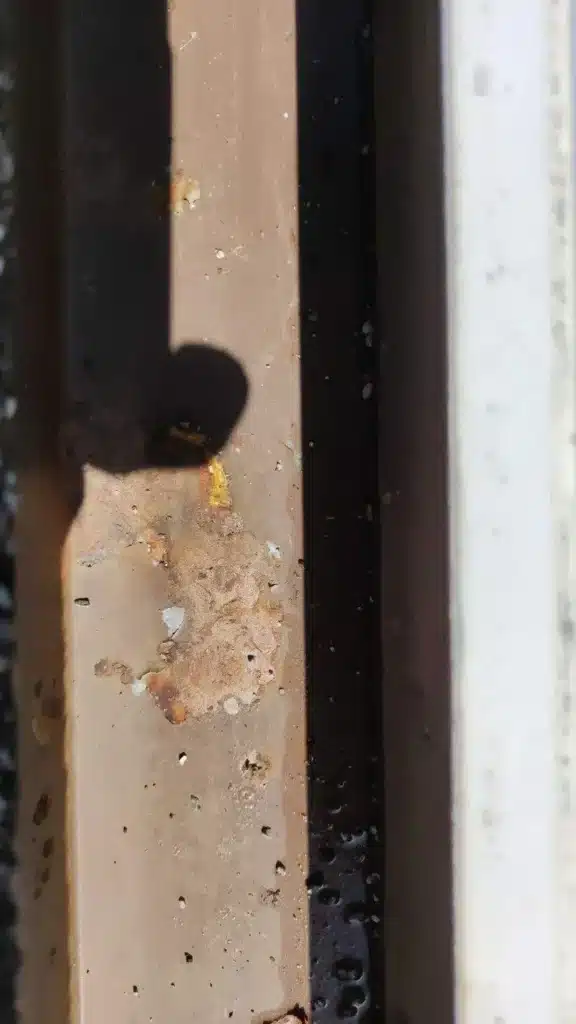
- 🕳️ Rust and Holes: When water sits in the gutters, it can lead to accelerated rusting. Eventually, the rust will eat through the metal and create leaks , causing punctures in the trough.
- The Fix: For small rust spots or holes, use a wire brush to clean the rust and patch with gutter sealant, with a metal patch if needed.. If the rust is extensive, the gutter section must be replaced. Rust typically occurs when water sits in the gutter for long periods of time so there are likely grading issues to correct for a long term fix as well.
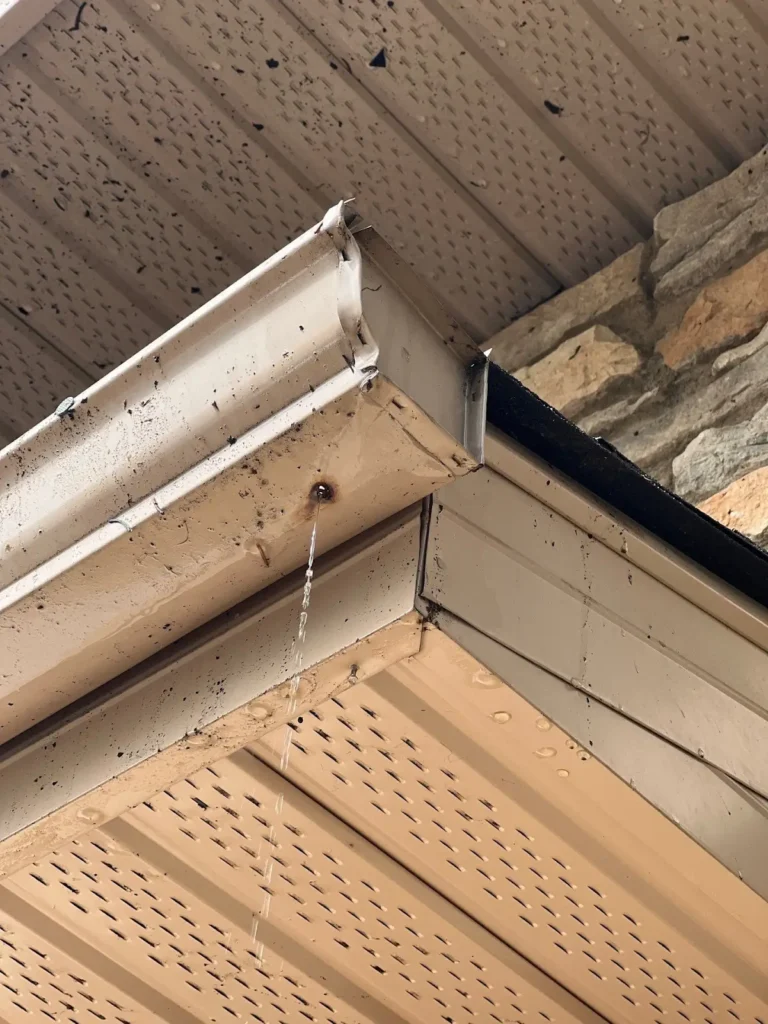
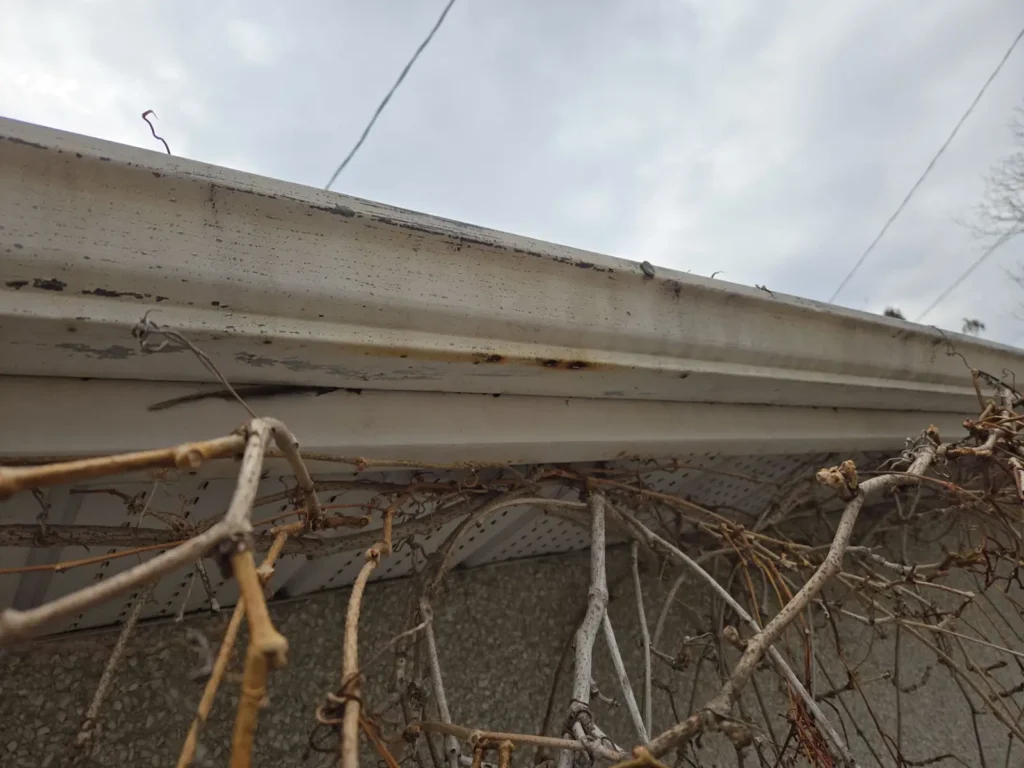
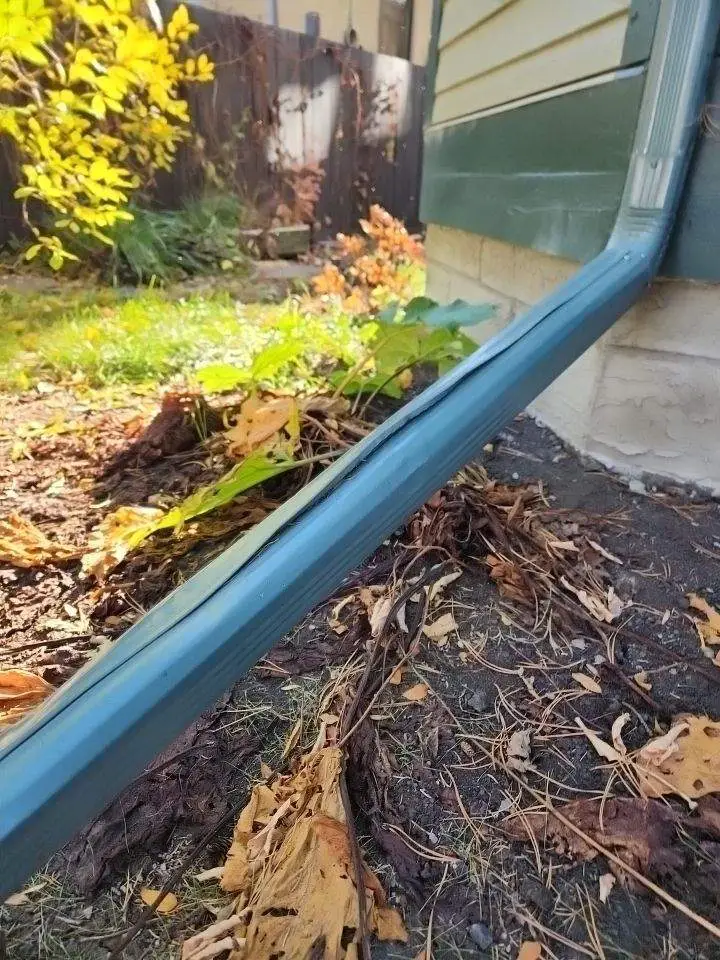
- ⚡ Kinked or Cracked Gutters/Downspouts: Splits or kinks may be cosmetic or sources of leaks.
- The Fix: Seal small splits with gutter sealant. If a section is severely kinked or crushed, cut out the damaged portion and install a new matching piece.
Structural and Connection Failures
- 🏚️ Eavestroughs Pulling Away from Fascia: Excessive weight in the eavestrough and water damage to the wooden fascia can cause fasteners to come loose. It can lead to water pooling and debris build up, and if left alone the issue will continue to get worse.
- The Fix: Loose eavestroughs can be reinforced with heavy-duty, hidden screw-in hangers. However, sometimes the fascia board that the gutters secure into has become rotten or weak. If the wood is rotten across it’s length, it must be replaced before reattaching the gutters.
- The Fix: Loose eavestroughs can be reinforced with heavy-duty, hidden screw-in hangers. However, sometimes the fascia board that the gutters secure into has become rotten or weak. If the wood is rotten across it’s length, it must be replaced before reattaching the gutters.
- ❌ Damaged/Missing Drop Outlet: A compromised outlet means the downspouts are not securely attached to the eavestroughs. The old crummy method of creating a downspout outlet involves cutting an ‘x’ in the bottom of the eavestrough and folding down the resulting tabs, but this method is prone to detaching and leaking.
- The Fix: Remove the damaged outlet, prepare the hole in the trough to accept a new downspout outlet, install it, and reattach the downspout to the new outlet.
- The Fix: Remove the damaged outlet, prepare the hole in the trough to accept a new downspout outlet, install it, and reattach the downspout to the new outlet.
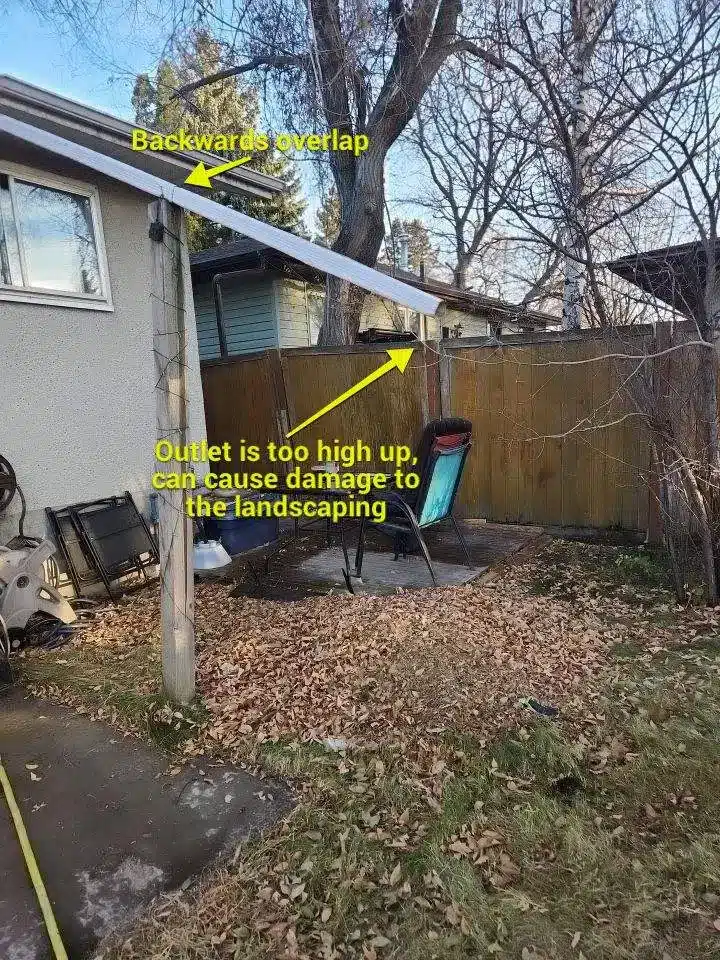
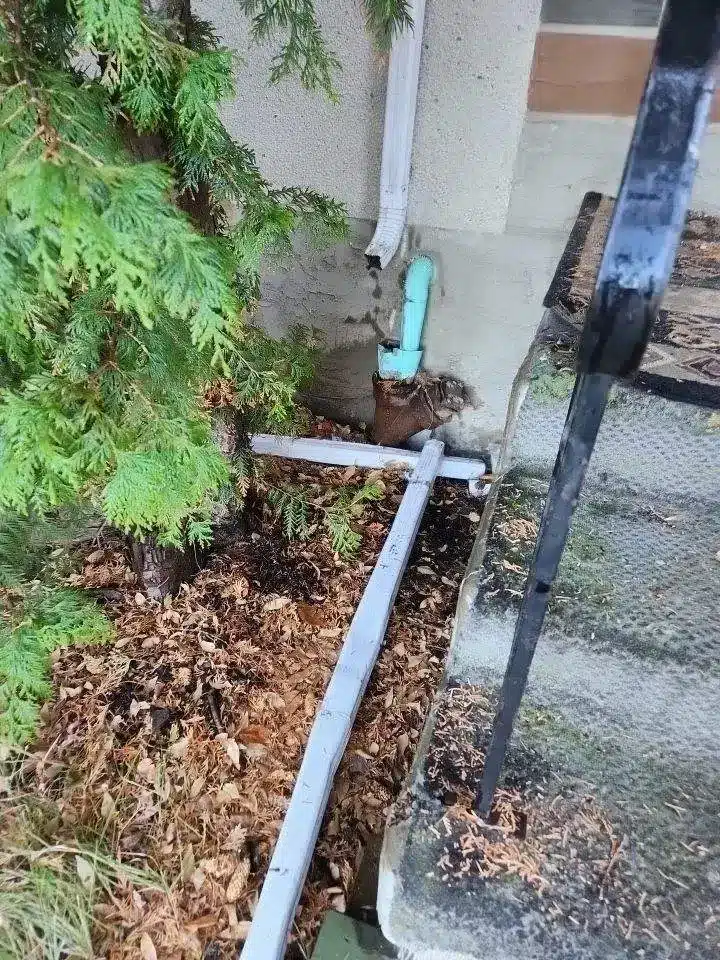
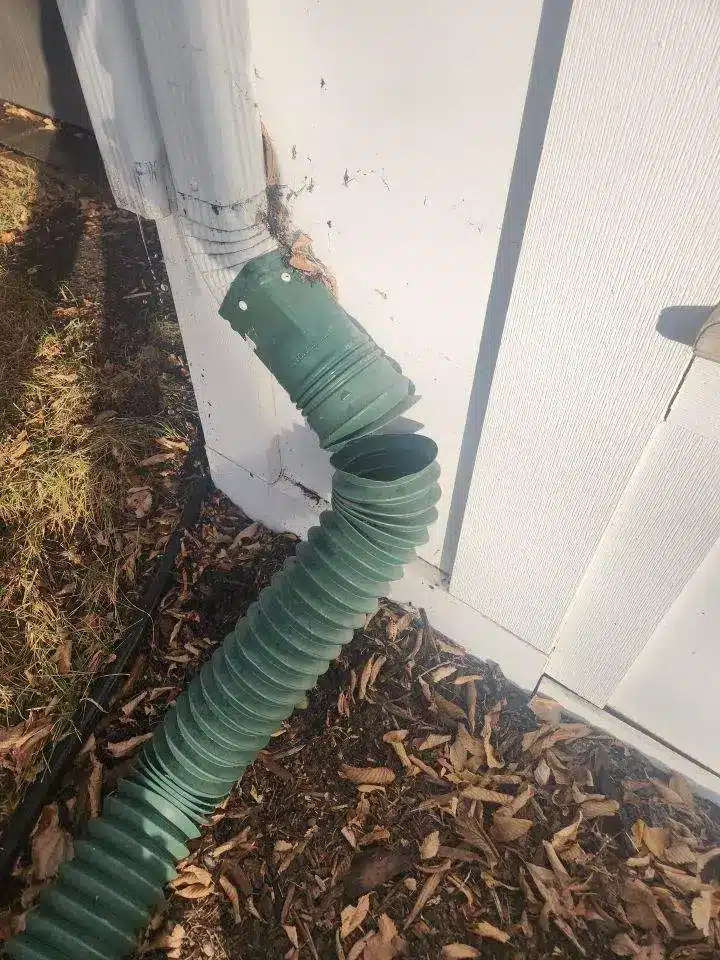
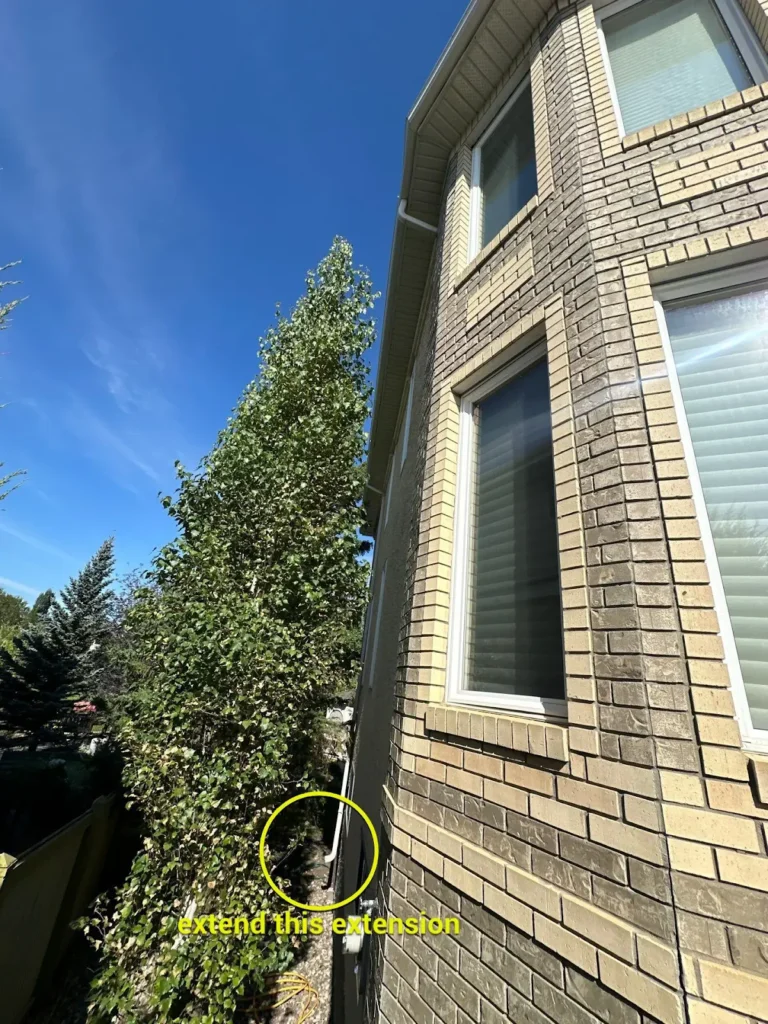
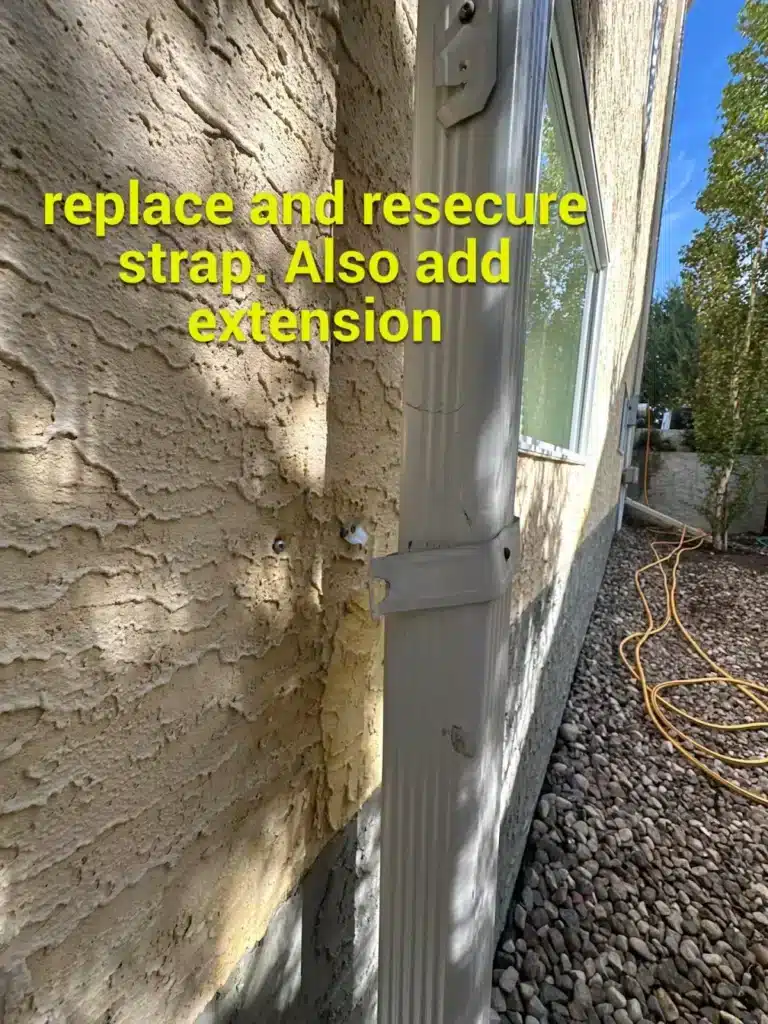
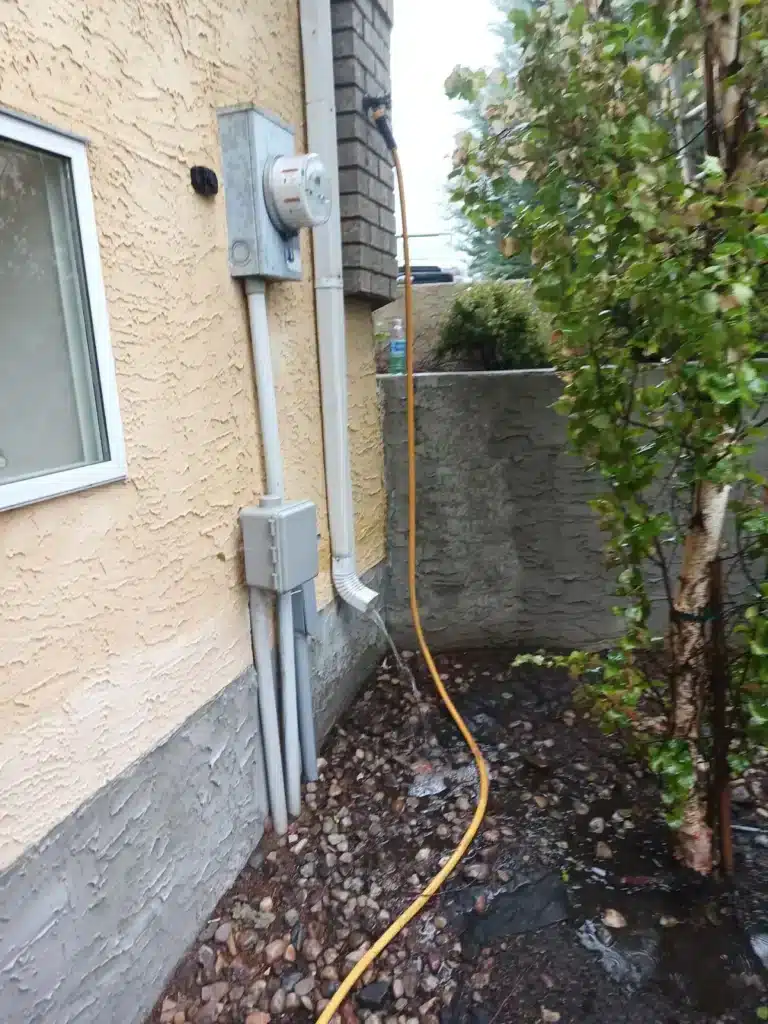
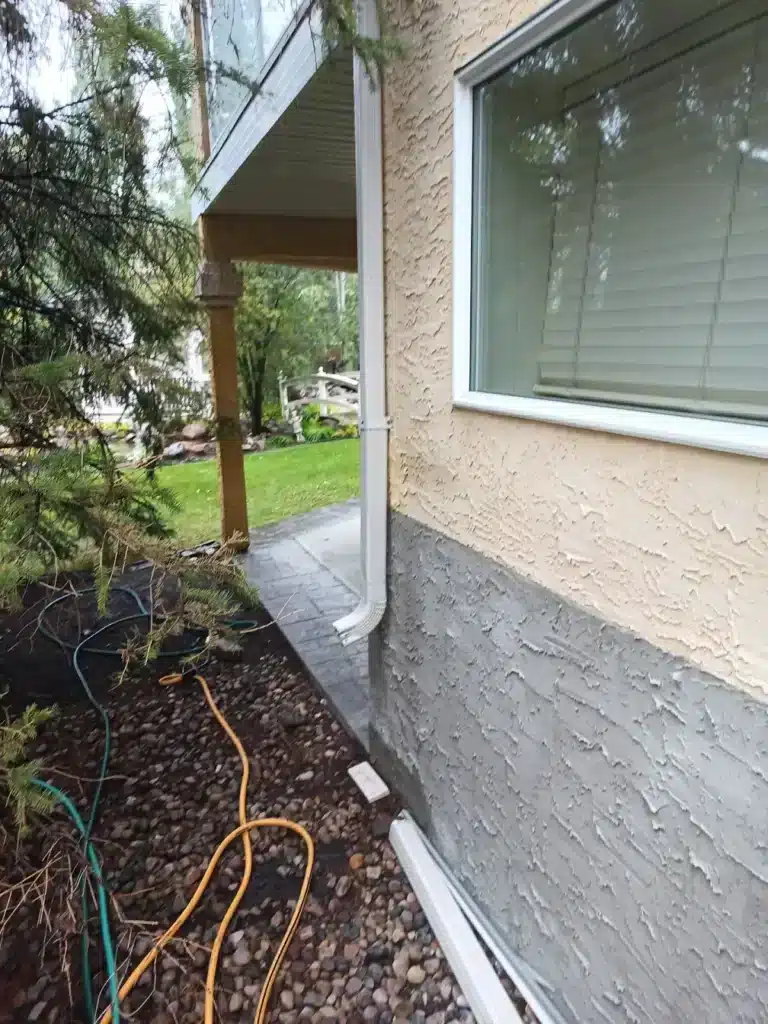
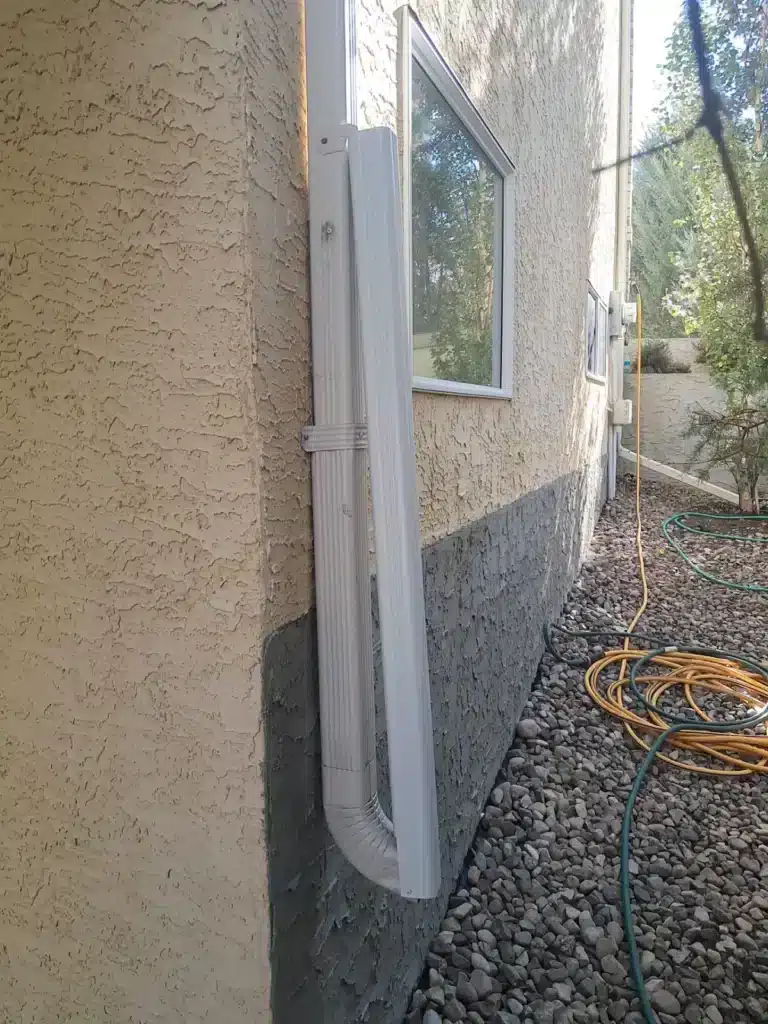
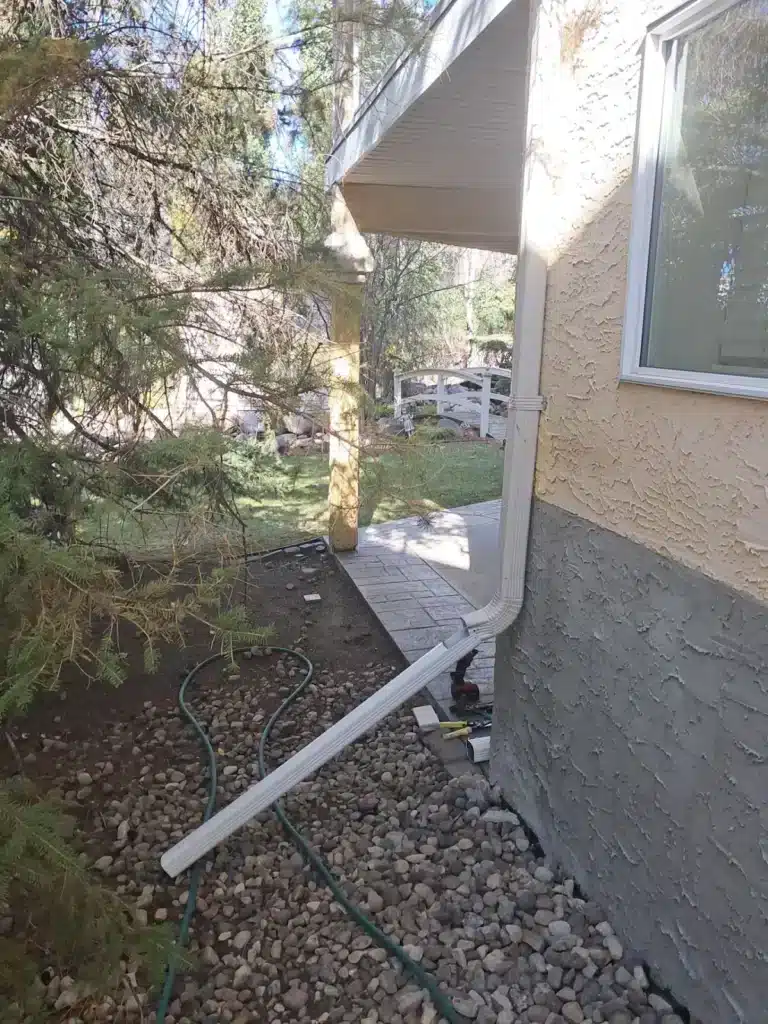
- 🚧 Missing/Damaged Downspout Extensions: Especially where these cross sidewalks they often get tripped on and damaged. If it’s missing or damaged, it can lead to water in the foundations of a house.
- The Fix: Attach new extensions to ensure water is carried safely away from the foundation. If they cross high-traffic areas, consider installing hinge-style extensions that can be moved out of the way when necessary, or better, rerouting the downspout so it does not cross underfoot.
Roof and Flashing Integration Issues
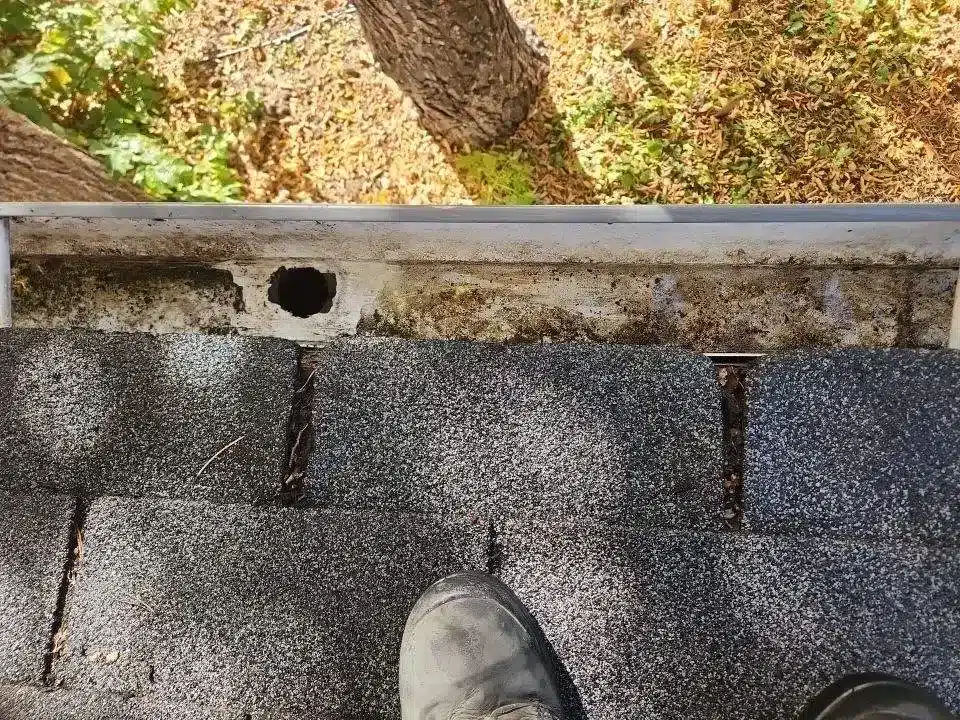
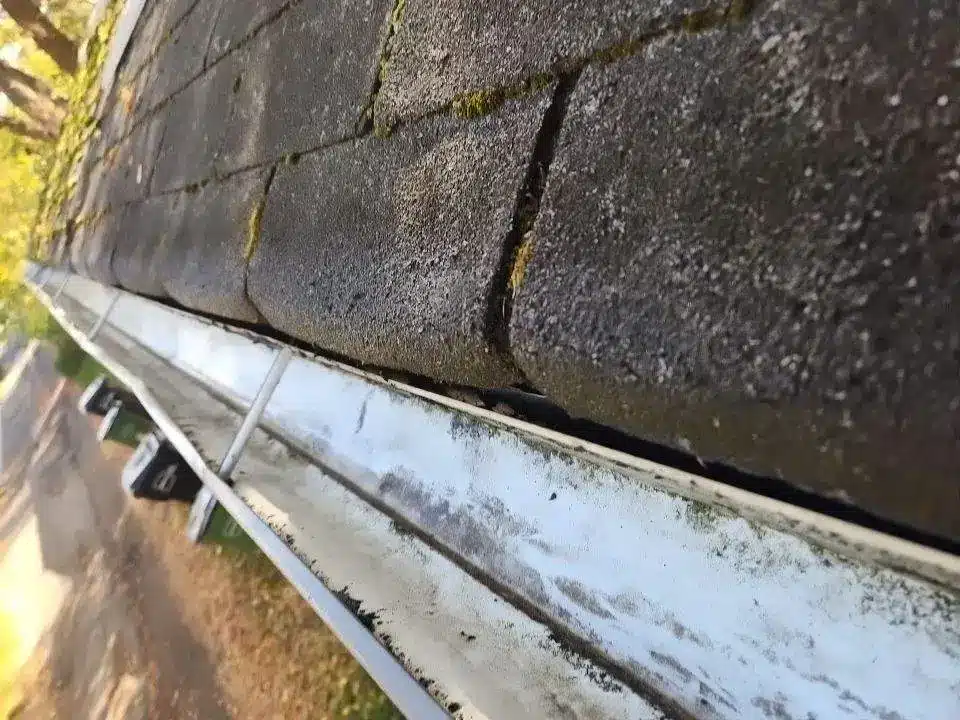
- 🏠 Water Running Down Fascia: When shingles do not overlap into the eavestrough, or when drip edge isn’t present, water may not make it into the trough, instead running down the fascia. In severe cases, this can lead to the wooden fascia board rotting at an accelerated rate.
- The Fix: Install an aluminum drip edge under the bottom row of shingles to bridge the gap and direct water neatly into the gutter.
- 📏 Improper Shingle Overlap: Shingles may be too short, causing water to run down fascia, or too long making it difficult to clean the troughs.
- The Fix: If shingles are too long, carefully trim them back so they extend only about ½ to ¾ of an inch over the gutter. If they are too short, install a drip edge. If they are so short the roof decking gets wet, then you need a roofer.
- 🌧️ Missing Kickout Flashing: Kickout flashing to direct water running along a roof/wall interface into a trough that ends at the wall was not installed during building.
- The Fix: Sometimes kickout flashing can be retrofitted in later, but it should be installed before siding and shingles. Hopefully one can slide a custom piece of kickout flashing under the roof shingles and behind the wall siding to act as a barrier, forcing the water directly into the trough. It is often the case that doing this properly involves removing siding and shingles.
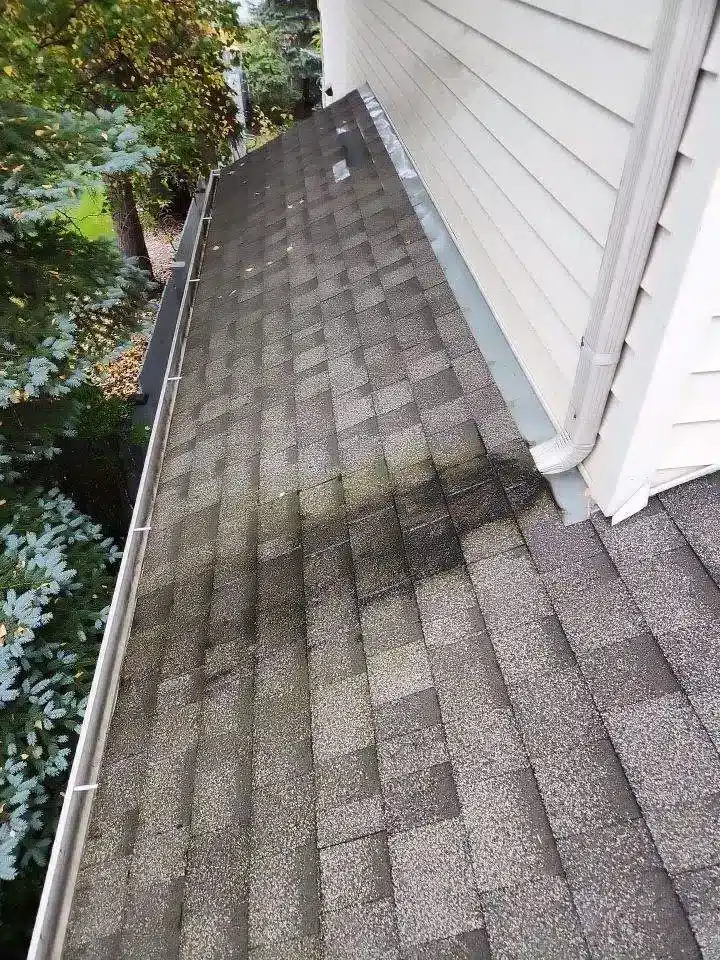
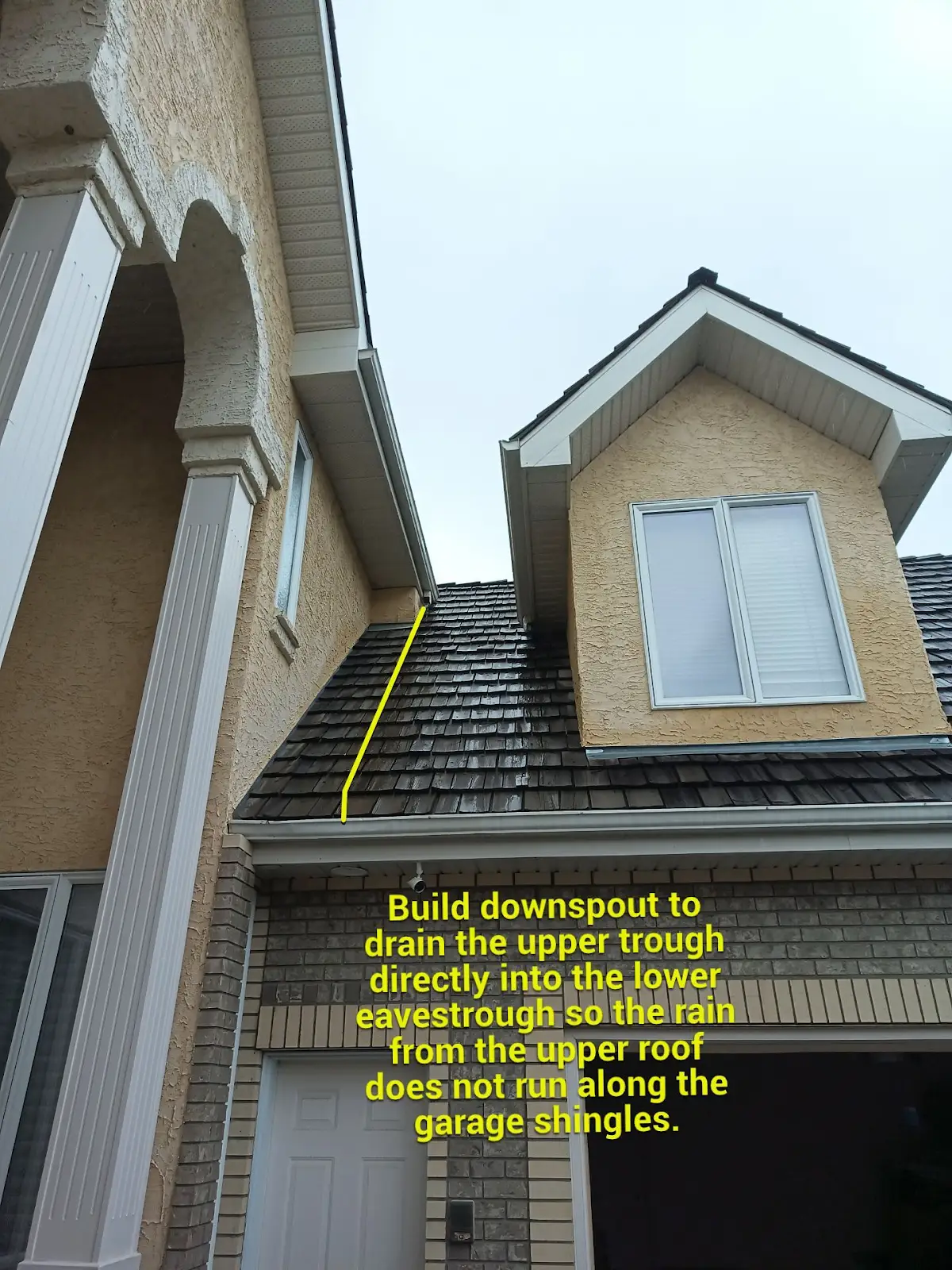
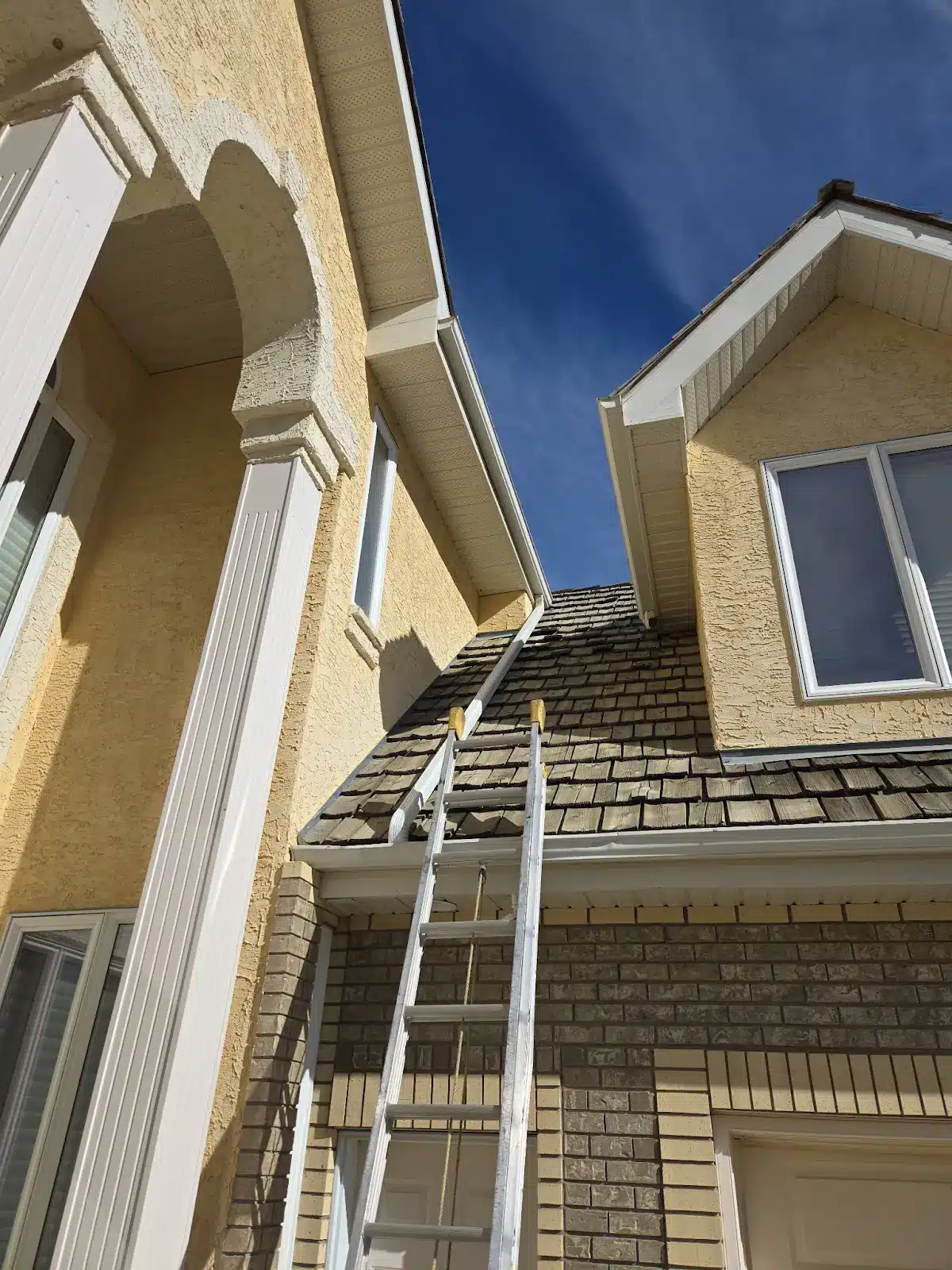
- 🏚️ Accelerated Roof Wear: Where a downspout discharges onto shingles of a lower roofline the concentrated waterflow will wear out the shingles faster than normal.
- The Fix: Connect an extension pipe to the upper downspout and route it along the roof slope so it discharges directly into the lower eavestrough, completely bypassing the shingles. Ensure that the downspout itself doesn’t hang too far into the lower trough blocking flow.